


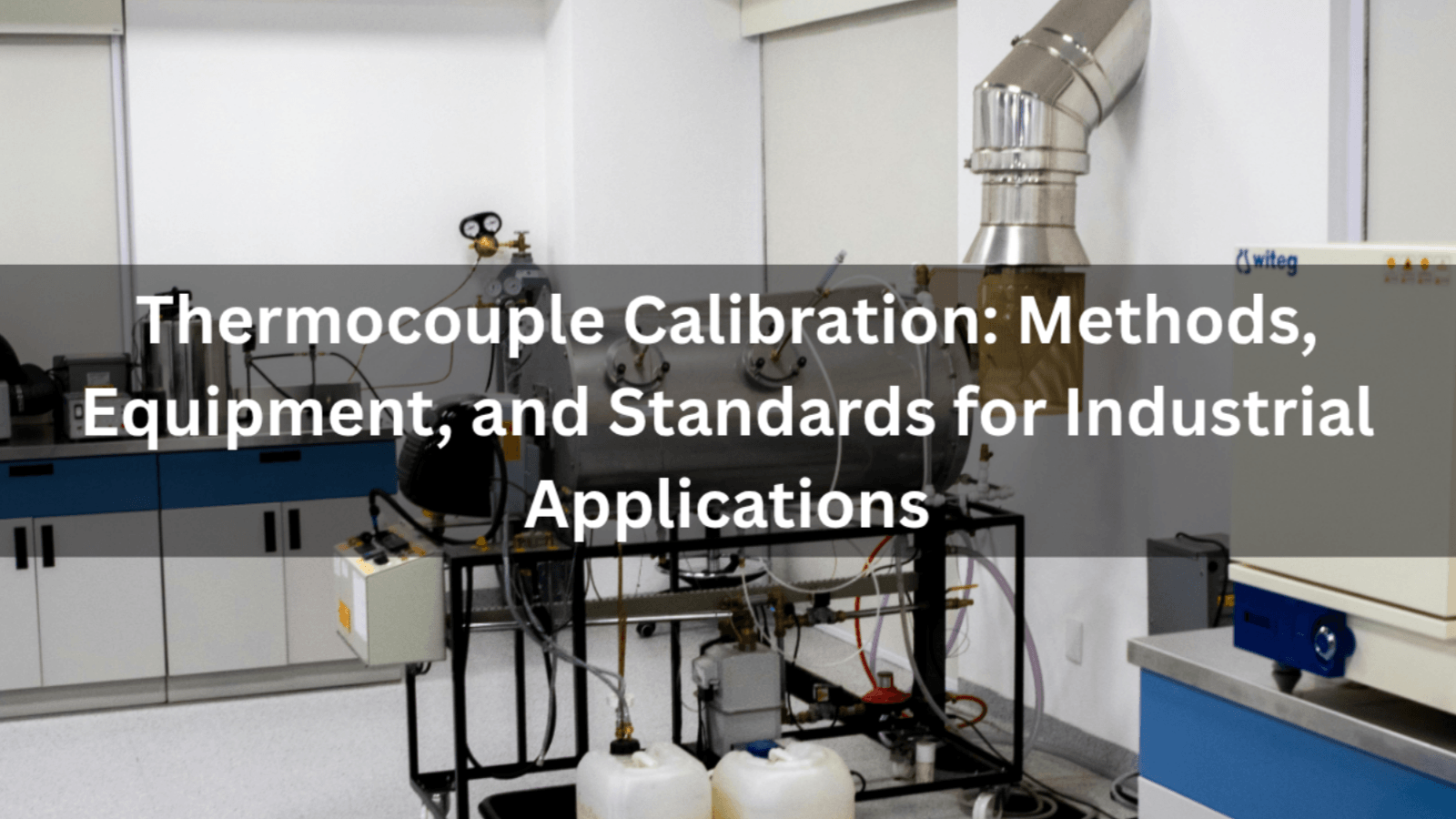
Thermocouples are the backbone of industrial temperature measurement, but they are not permanently accurate. Over time, exposure to high temperatures and harsh environments causes metallurgical drift, causing their millivolt output to deviate. Thermocouple calibration is the essential process of verifying and adjusting these sensors to ensure accurate readings. In this comprehensive guide, we will explore why calibration is necessary, the core methods used (including Comparison and Fixed-point), and how to evaluate the right equipment to build your in-house calibration lab that meets ITS-90 international standards.
Table of Contents
Why Do Thermocouples Need Calibration?
Industrial processes rely heavily on accurate temperature control. However, sensors degrade over time due to chemical and physical changes. The primary reasons for regular thermocouple calibration include:
- Metallurgical Drift: Metal wires can oxidize, decarburize, or experience grain growth at high temperatures. For example, Type K thermocouples can experience "Green Rot" or short-range ordering, leading to significant measurement errors.
- Thermal Inhomogeneity: Repeated heating and cooling cycles create sections of wire with different physical properties. If the temperature gradient shifts along these sections, the sensor's EMF output will change even if the tip temperature remains constant.
- Regulatory Compliance: Frameworks such as ISO 9001, FDA regulations, and AMS 2750 for aerospace strictly require fully traceable calibration records to ensure process repeatability.
- Quality & Cost Control: Operating with uncalibrated sensors leads to excessive energy consumption, failed audits, and scrapped products due to "silent" temperature deviations.
Core Thermocouple Calibration Methods
Understanding the methodologies is crucial before investing in equipment. The industry primarily relies on two physical calibration methods to verify the Electromotive Force (EMF) output:
- The Comparison Method (Industrial Standard): This is the most practical method for commercial labs. The Device Under Test (DUT) and a highly accurate reference probe (like a Secondary Standard PRT or Type S Thermocouple) are placed together into a stable heat source (like a Dry Block Calibrator or Bath). Their readings are compared across multiple setpoints.
- The Fixed-Point Method (Laboratory Standard): Used for ultimate precision and defining the ITS-90 scale, this relies on the physical phase changes of pure substances (e.g., the freezing point of Tin at 231.928°C or Zinc at 419.527°C). It eliminates the need for a reference probe but is expensive and slow.
How Often Should You Calibrate?
The frequency depends entirely on the application, the thermocouple type (Base Metal vs. Noble Metal), and the environment. Here is a general guideline:
- Extreme Environments (above 1000°C): Base metal sensors (Type K, J, E) may need calibration monthly or even be treated as "one-time use" in critical batches due to rapid oxidation.
- High-Precision Processes: Noble metal sensors (Type R, S, B) are more stable but require 6-month checks to ensure no contamination of the platinum elements.
- Mild Processes (below 200°C): A 1-year cycle is typical for sensors not exposed to corrosive gases or mechanical vibration.
Always consult your specific industry compliance standards (such as AMS 2750F or CQI-9) for strict replacement and calibration intervals based on sensor "Use-Cycles."
Building Your In-House Setup: Equipment Overview
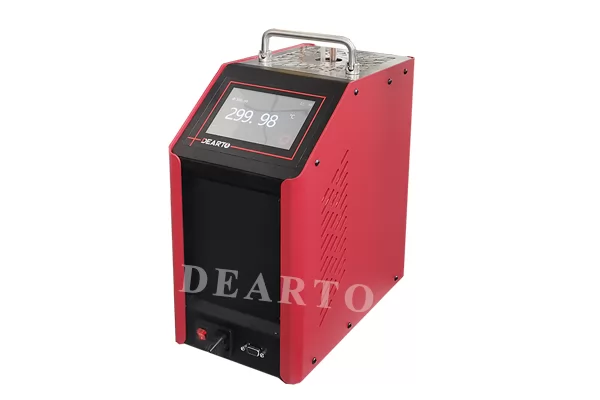
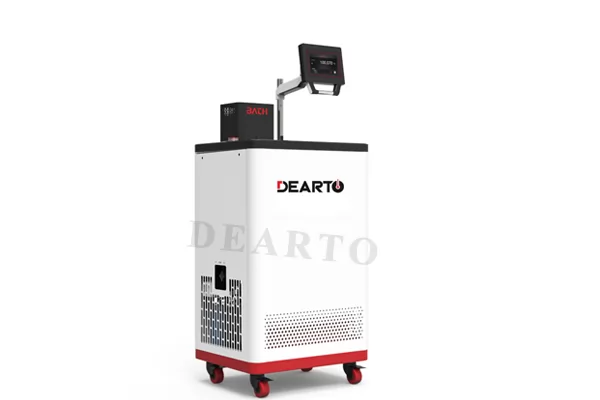
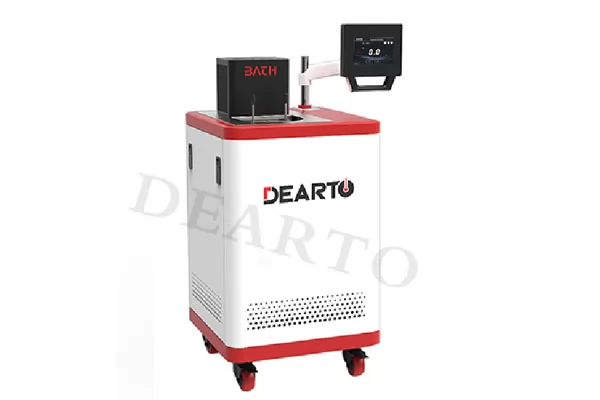
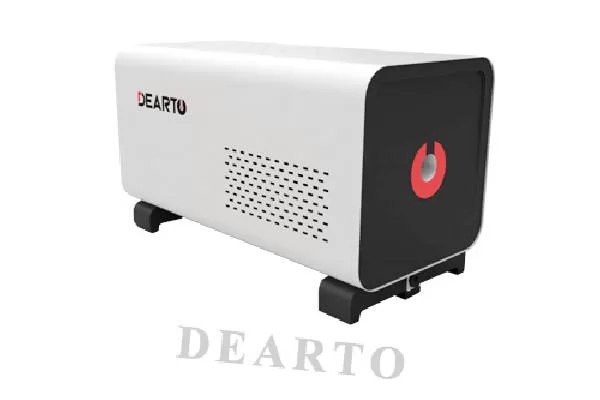
If you are evaluating equipment to bring thermocouple calibration in-house, choosing the right heat source is your most critical decision. DEARTO offers industry-leading solutions for every temperature range:
How to Choose the Right Equipment
Choosing the right equipment isn't just about picking a product; it's about matching your lab's specific needs with the right technology. When evaluating, consider these 5 Critical Factors:
- 1. Temperature Range & Depth: Ensure the heat source covers your operational range. Note that high-temperature noble metal thermocouples often require immersion in a Calibration Furnace reaching 1200°C+.
- 2. Axial and Radial Uniformity: Professional labs look for heat sources with minimal temperature gradients. Liquid baths offer superior uniformity compared to dry blocks because the fluid transfers heat evenly across all probe surfaces.
- 3. Sensor Shape and Size: Short probes or sensors with large transition junctions cannot be properly calibrated in standard dry blocks due to "stem conduction" errors. Liquid baths or specialized short-depth calibrators are required.
- 4. Portability vs. Stability: For onsite field work, portable dry blocks are the gold standard for speed and convenience. For a primary lab, a stationary high-stability bath is preferred to minimize uncertainty.
- 5. Data Automation: Modern calibrators offer built-in HART communication and automatic procedure execution, which reduces human error and simplifies ISO 17025 documentation.
Conclusion
Investing in the right thermocouple calibration equipment ensures strict compliance with industry standards like ISO 17025 and AMS 2750, protecting your entire production process from costly temperature errors. By evaluating your specific temperature range, axial uniformity needs, and accuracy requirements, you can confidently select the perfect heat source—be it a dry block, liquid bath, or furnace—to build a reliable in-house calibration system.
For further consultation on optimizing your temperature measurement instruments and selecting the right reference standards, contact the DEARTO engineering team today.