


DTZ-MBC Multi-Slot Cluster Platinum Resistance calibration device
Overview
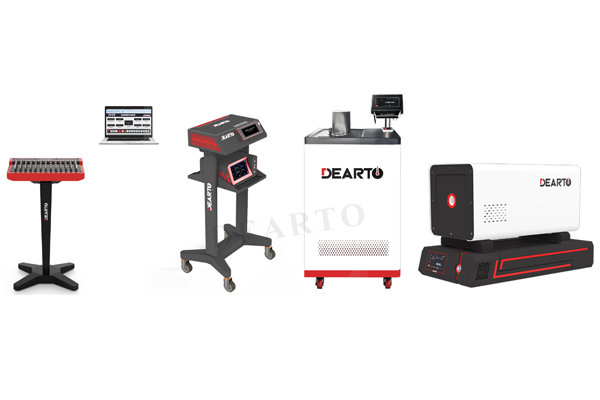
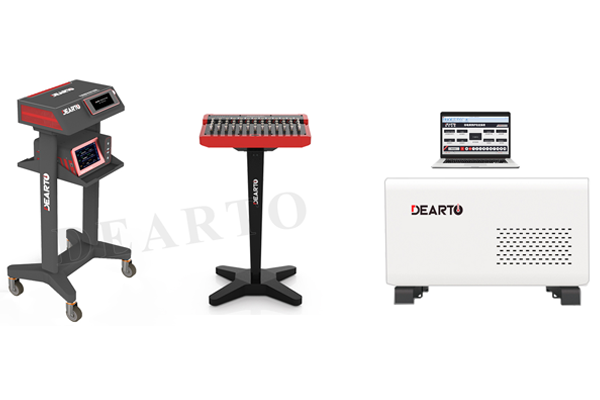
This system is an intelligent cluster-based automated verification platform designed for batch, multi-station temperature sensor calibration scenarios, suitable for large-scale verification and testing of various temperature measuring instruments. The system supports synchronized temperature control of up to 8 constant temperature baths, which can be cascaded and expanded to 64 units. With automatic device discovery and one-click configuration features, a distributed multi-bath temperature a distributed multi-bath temperature control network can be quickly established, enabling seamless equipment expansion and cluster collaboration.
The Functions of System Software
| Scalable Cluster Expansion |
Multi-Bath Synchronized Temperature Control with Cascade Expansion: Supports synchronized temperature control of 8 constant temperature baths, expandable to 64 baths; suitable for large-batch, multi-station verification scenarios. Automated Device O&M: Built-in constant temperature bath communication parameter configuration and communication testing functions, supporting automatic device discovery and one-click configuration. |
| Full-Category DUT Compatibility |
Full Coverage of Multi-Graduation Resistance Thermometers: Supports Pt10, Pt100, Pt-X, Cu50, Cu100 and other resistance thermometer types; covers AA, A, B, C classes and custom tolerance grades. R0 resistance value is freely configurable, compatible with 2-wire, 3-wire, and 4-wire tabulation methods.
Flexible NTC Thermistor Adaptation: Supports custom β coefficient and R25 parameters, compatible with different types of thermistors, and can automatically perform detection and calculate the β coefficient.
Temperature Transmitter Adaptation: Supports configuration of transmitter range and accuracy parameters, meeting the verification requirements of temperature transmitter instruments.Multi-Dimensional Test Items: Can verify core metrological parameters including resistance thermometer temperature coefficient α, R0, temperature tolerance, and thermistor β coefficient. |
| Flexible Constant Temperature Source & Standard Configuration |
Dual-Type Constant Temperature Source Support: Compatible with constant temperature baths and calibration furnaces; temperature control parameters can be independently configured, with automatic temperature point switching management.
Multi-Standard Instrument Adaptation: Supports standard resistance thermometers and S-type standard thermocouples; custom standard instrument switching temperature points are configurable, along with editability of standard instrument stability and assessment time parameters.
Dual Temperature Control Modes: Provides manual and automatic temperature control modes to accommodate different verification scenario requirements.Multi-constant-temperature-source parallel task assignment, independent start/stop, and separate temperature point parameter configuration. Intelligent PID temperature control algorithm with automatic temperature stability determination. |
| Efficient & Intelligent Group Verification |
Multi-Group Parallel Verification: Supports simultaneous verification of 4 groups of different graduation-type resistance thermometers, with each group independently configurable for standard instrument selection; up to 999 test points per single verification process, meeting large-batch, multi-zone verification requirements.
Intelligent Slot Scheduling: Supports designated-point binding, where each verification temperature point can be matched to a specified constant temperature bath;alternatively, the software can automatically match the optimal bath based on temperature points, achieving multi-bath collaborative scheduling.
Data & Report Integration: Supports grouped verification mode with automatic merging of multi-bath DUT data, generating unified verification reports to significantly improve data processing efficiency.
Full-Process Visualization: Real-time display of multiple constant temperature bath heating and temperature control status, with full-process visual monitoring of verification progress and equipment operation. Automatically calculates deviation, correction values, measurement repeatability, performs automatic uncertainty evaluation, and generates original records and calibration certificates. Supports custom templates, data export, and database traceability.
|
|
Items |
Parameters |
Items |
Parameters |
|
Accuracy class |
0.005% |
TC free end compensation range |
(5~50)℃ |
|
Scan switch parasitic potential |
≤0.2µV |
Display resolution |
0.01℃ |
|
Data collection difference between channels |
≤0.5µV、1.0 mΩ |
Control ability of TC validation furnace |
220V、0-40A |
|
Repeatability of measurement |
≤1.0µV、3.0 mΩ |
Set point deviation |
≤±0.1℃ |
|
Validation of measurement data processing results |
≤0. 1µV、0.1mΩ |
Total extended uncertainty of thermocouple system |
≤0.68℃ |
|
Total expansion uncertainty of resistance temperature detector system |
The standard platinum resistance Rtp is remeasured using a water three-phase point flask to obtain: thermal resistance≤0.03℃(0℃);0.06(100℃) |
||
|
Standard platinum resistance Rtp directly uses the value given by the certificate: resistance temperature detector ≤ 0.05℃(0℃);0.09(100℃) |
|||
|
TC system for working |
Constant temperature ≤0.5℃/6min Measurement ≤0.1℃/min |
||
|
Constant temperature performance of industrial thermal resistance system |
Constant temperature ≤0.02℃/10min Measurement ≤0.01℃/min |
||